.png)

Top Office Interior Design Trends for Modern Workspaces in 2026

Updated: Aug 27
Introduction
The modern workplace is evolving faster than ever. Businesses are redesigning offices to support hybrid work, improve employee well-being, and create environments that encourage collaboration, creativity, and productivity. In 2026, office design is no longer just about aesthetics—it is a strategic investment that influences employee engagement, operational efficiency, and brand perception.
From flexible workstations and smart technology to sustainable materials and wellness-focused interiors, companies are embracing innovative solutions that meet the expectations of today's workforce.
This guide explores the top office interior design trends for modern workspaces in 2026, helping business owners, architects, facility managers, and office interior designers create workplaces that are functional, future-ready, and visually inspiring.
Why Office Design Is Changing in 2026
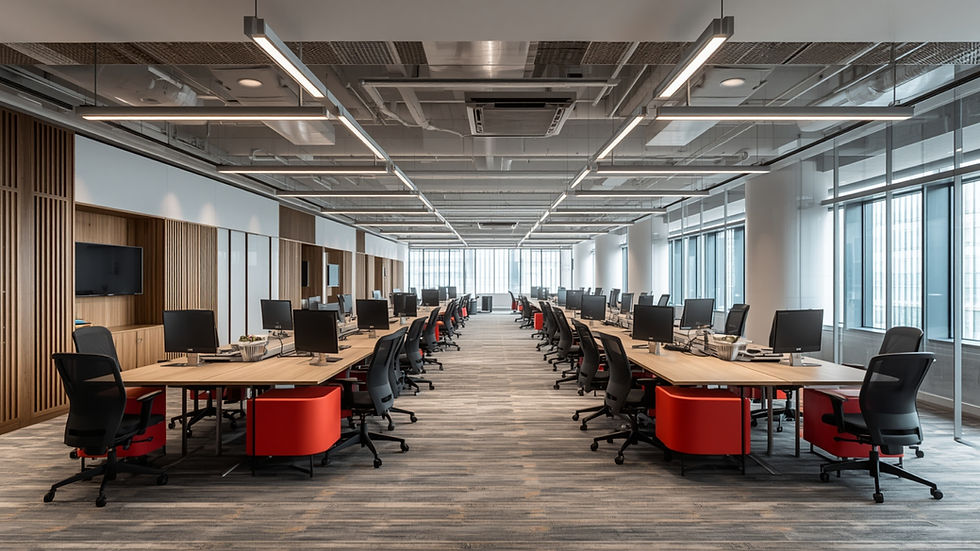
Several factors are driving the transformation of office interiors:
Hybrid work models
Employee wellness initiatives
Technological advancements
Sustainability goals
Demand for flexible workspaces
Improved collaboration
Efficient space utilization
Stronger workplace branding
Modern offices are designed to support multiple work styles rather than following a one-size-fits-all layout.
Benefits of Following Modern Office Design Trends
Investing in contemporary office interiors offers measurable business benefits. To stay ahead of evolving workplace strategies, explore our Office Interior Design Trends.
Key Advantages
Higher employee productivity
Better collaboration
Improved talent attraction and retention
Enhanced brand identity
Lower operating costs
Greater workplace flexibility
Healthier indoor environments
Increased employee satisfaction
Businesses that regularly update their workspaces often create more engaging and adaptable environments for their teams.
Top Office Interior Design Trends for 2026

1. Hybrid Workplace Layouts
Hybrid work continues to redefine office planning.
Key Features
Hot-desking
Shared workstations
Reservable meeting rooms
Flexible seating
Digital desk booking
Benefits
Better space utilization
Lower operational costs
Greater flexibility
Supports remote and in-office employees
2. Activity-Based Working (ABW)
Rather than assigning employees fixed desks, Activity-Based Working provides different zones for different tasks.
Examples
Focus booths
Collaboration hubs
Brainstorming spaces
Quiet libraries
Informal lounges
Employees choose the environment that best matches their current activity, improving both productivity and comfort.
3. Biophilic Office Design
Bringing natural elements into the workplace remains one of the strongest design trends.
Ideas
Indoor plants
Living green walls
Natural timber finishes
Stone textures
Water features
Daylight optimization
Benefits
Reduced stress
Better air quality
Enhanced creativity
Improved employee well-being
4. Smart Office Technology

Technology continues to reshape workplace experiences.
Popular Smart Features
Automated lighting
Occupancy sensors
Smart climate control
AI-powered meeting room scheduling
Touchless access control
Wireless charging stations
These systems improve convenience, reduce energy consumption, and streamline daily operations.
Expert Tip
The most successful office trends are those that align with your business goals rather than simply following industry fashion. Focus on solutions that improve employee experience, operational efficiency, and long-term adaptability while supporting your organization's culture and growth plans.
5. Wellness-Focused Office Design
Employee well-being has become one of the biggest priorities in workplace design. Modern businesses recognize that a healthy workforce is often more engaged, productive, and satisfied. Our Modern Office Interiors guide showcases wellness-focused workspaces, ergonomic layouts, biophilic design, and smart office solutions that support employee performance.
Popular Wellness Features
Wellness rooms
Meditation spaces
Standing desks
Sit-stand workstations
Indoor air purification
Natural ventilation
Healthy pantry areas
Fitness corners
Business Benefits
Improved employee morale
Reduced workplace stress
Better focus and concentration
Lower absenteeism
Higher employee retention
Companies investing in wellness-focused environments often experience stronger workplace culture and improved overall performance.
6. Acoustic Office Design
Noise remains one of the biggest productivity challenges in open offices. In 2026, businesses are investing in acoustic solutions that create quieter and more comfortable workplaces.
Effective Acoustic Solutions
Acoustic ceiling panels
Fabric wall panels
Soundproof meeting rooms
Phone booths
Carpet tiles
Upholstered furniture
Acoustic partitions
Benefits
Better concentration
Improved speech privacy
Reduced distractions
Higher meeting quality
A well-planned acoustic strategy balances collaboration with focused work.
7. Flexible and Modular Furniture
Today's offices need to adapt quickly to changing business requirements.
Popular Modular Solutions
Height-adjustable desks
Foldable meeting tables
Mobile storage units
Modular workstations
Stackable chairs
Movable partitions
Advantages
Easy reconfiguration
Supports business growth
Reduces renovation costs
Maximizes space utilization
Flexible furniture is particularly valuable for startups and hybrid workplaces where team sizes and layouts may change frequently.
8. Experience-Driven Reception Areas

The reception area is often the first physical interaction visitors have with your brand. Modern reception spaces are designed to create memorable first impressions while improving functionality.
Trending Reception Features
Statement reception desks
Digital visitor check-in kiosks
Interactive display screens
Company logo feature walls
Comfortable waiting lounges
Ambient lighting
Sustainable décor
Business Impact
A professionally designed reception communicates credibility, strengthens brand identity, and creates a welcoming environment for clients, partners, and prospective employees. Our Commercial Office Interiors guide showcases reception designs, collaborative workspaces, executive cabins, and modern office layouts that enhance business image and functionality.
9. Collaborative Work Hubs
Instead of relying solely on formal conference rooms, businesses are creating informal collaboration zones that encourage teamwork and creativity.
Design Ideas
Lounge seating
Collaborative tables
Whiteboard walls
Writable glass partitions
Soft seating clusters
Coffee bar meeting spaces
Benefits
Encourages idea sharing
Supports cross-functional collaboration
Improves team communication
Creates a more dynamic work environment
These flexible spaces allow employees to interact naturally without the formality of traditional meeting rooms.
10. Sustainable and Eco-Friendly Materials
Sustainability continues to influence material selection in commercial interiors.
Popular Sustainable Materials
FSC-certified wood
Recycled metal
Bamboo panels
Cork flooring
Recycled carpet tiles
Low-VOC paints
Recycled glass
Eco-friendly laminates
Why It Matters
Environmentally responsible materials can improve indoor air quality, reduce environmental impact, and contribute to green building certifications while supporting long-term maintenance goals.
Emerging Material Trends for 2026
Businesses are increasingly selecting materials based on durability, sustainability, and ease of maintenance. Our Workplace Design Trends 2026 guide highlights emerging trends in sustainable materials, biophilic design, flexible workspaces, and smart office solutions for future-ready workplaces.
Material | Common Applications | Key Benefits |
Engineered Wood | Workstations & cabinetry | Durable and cost-effective |
Acoustic Felt Panels | Walls & ceilings | Noise reduction |
Glass Partitions | Cabins & meeting rooms | Natural light distribution |
Luxury Vinyl Tiles (LVT) | Flooring | Durable and easy to maintain |
Quartz Surfaces | Pantry & breakout areas | Low maintenance |
Powder-Coated Metal | Furniture frames | Strength and longevity |
Selecting commercial-grade materials helps reduce lifecycle costs while maintaining a professional appearance.
Lighting Trends for Modern Offices

Lighting has become a key element of workplace design rather than simply a functional requirement.
Trending Lighting Solutions
Linear LED fixtures
Suspended pendant lights
Human-centric lighting
Motion-sensor lighting
Dimmable meeting room lighting
Accent lighting for branding
Task lighting at workstations
Benefits
Better visual comfort
Improved energy efficiency
Enhanced employee alertness
Reduced eye strain
More attractive work environments
Human-centric lighting systems, which adjust brightness and color temperature throughout the day, are becoming increasingly popular in premium office projects.
Technology Integration Trends
Modern offices continue to adopt technologies that simplify operations and improve employee experience.
Popular upgrades include:
Wireless presentation systems
Smart meeting room scheduling
Occupancy analytics
IoT-enabled lighting
Touchless access control
Digital visitor management
Mobile workplace apps
Technology should be seamlessly integrated into the office design to enhance usability without creating unnecessary complexity.
Expert Tip
The most effective office interiors combine flexibility, sustainability, and employee comfort. Rather than adopting every new trend, focus on features that genuinely improve your team's daily experience, support future growth, and align with your company's operational needs and brand identity.
11. AI-Powered Smart Workplaces
Artificial Intelligence (AI) is reshaping office environments by making workplaces more intelligent, efficient, and personalized. AI-powered systems help businesses optimize space utilization, improve employee comfort, and reduce operational costs.
Popular AI Office Features
AI-powered room booking
Occupancy analytics
Predictive maintenance
Smart HVAC optimization
Intelligent lighting controls
Voice-enabled meeting rooms
Workplace analytics dashboards
Business Benefits
Reduced energy consumption
Better workspace utilization
Improved employee experience
Data-driven facility management
Lower maintenance costs
As AI continues to evolve, offices will become increasingly responsive to employee preferences and workplace demands.
12. Hospitality-Inspired Office Design
Modern offices are beginning to resemble premium hotels rather than traditional workplaces. The goal is to create welcoming environments that make employees and visitors feel comfortable.
Hospitality Design Features
Lounge-style seating
Café-inspired breakout areas
Concierge-style reception
Premium finishes
Warm lighting
Comfortable waiting spaces
High-quality artwork
Benefits
Stronger first impressions
Improved employee satisfaction
More inviting workplace culture
Better client experience
This trend reflects the growing emphasis on employee experience and workplace hospitality.
13. Minimalist Office Interiors
Minimalism remains one of the strongest commercial design trends due to its clean appearance and practical functionality. If you're planning an office makeover, read our Office Renovation Ideas guide for creative inspiration and practical renovation strategies.
Characteristics
Neutral color palettes
Simple furniture
Hidden storage
Clean lines
Reduced visual clutter
Functional décor
Advantages
Easier maintenance
Better organization
Reduced distractions
Timeless aesthetics
Minimalist offices create calm environments that support concentration and efficiency.
14. Brand Storytelling Through Interior Design
Office interiors are increasingly being used to communicate a company's identity, values, and culture.
Branding Ideas
Company timeline walls
Mission and vision graphics
Digital brand displays
Custom artwork
Corporate color palettes
Interactive installations
Product showcase areas
Why It Matters
Employees feel more connected to the organization when the workspace reflects its purpose, while visitors gain a stronger understanding of the brand from the moment they enter.
15. Multi-Functional Meeting Spaces

Meeting rooms are becoming more flexible to support a variety of work styles.
Modern Features
Movable partitions
Modular furniture
Video conferencing systems
Writable walls
Wireless presentation tools
Adjustable lighting
Benefits
Better space utilization
Support for hybrid meetings
Easier collaboration
Adaptability for training, workshops, and events
Flexible meeting spaces help organizations maximize the value of every square foot.
16. Residential-Inspired Workplace Design
Many organizations are moving away from corporate-looking offices and creating spaces that feel more like home.
Popular Residential Elements
Soft furnishings
Area rugs
Decorative lighting
Bookshelves
Indoor plants
Wooden textures
Comfortable sofas
Business Benefits
Creates a relaxed atmosphere
Encourages creativity
Improves employee comfort
Makes the office more welcoming
This approach is especially popular among creative agencies, startups, and coworking spaces.
17. Inclusive and Accessible Workplace Design
Inclusive office design ensures that employees and visitors of all abilities can use the workspace comfortably.
Accessibility Features
Step-free access
Wider walkways
Height-adjustable desks
Accessible meeting rooms
Clear wayfinding signage
Adjustable lighting
Inclusive restroom facilities
Why It Matters
Inclusive design supports diversity, complies with accessibility standards where applicable, and creates a welcoming environment for everyone.
Office Color Trends for 2026

Color continues to influence mood, creativity, and workplace identity.
Color | Workplace Effect |
Deep Blue | Focus and professionalism |
Sage Green | Calmness and balance |
Warm Beige | Comfort and sophistication |
Charcoal Grey | Modern corporate appearance |
Terracotta | Warmth and creativity |
Muted Olive | Connection with nature |
Natural Wood | Warm, timeless aesthetic |
Many offices combine neutral base colors with vibrant accents to create visually engaging yet professional environments.
Budget-Friendly Ways to Modernize an Office
Not every modernization project requires a complete renovation. Small upgrades can have a significant impact. Our Sustainable Office Design guide explains how energy-efficient lighting, recycled materials, biophilic elements, and environmentally responsible upgrades can modernize offices without requiring a full renovation.
Affordable Improvements
Replace fluorescent lights with LED fixtures.
Add indoor plants.
Introduce acoustic panels.
Refresh walls with contemporary paint colors.
Upgrade meeting room technology.
Install branded graphics.
Replace outdated office chairs.
Add modular collaboration furniture.
Improve storage solutions.
Update reception décor.
These changes can improve both aesthetics and functionality without requiring major structural work.
Planning for Future Workplace Trends
Office design should be adaptable enough to accommodate future changes in technology, workforce size, and work patterns.
Future-Proofing Strategies
Choose modular furniture.
Install scalable networking infrastructure.
Use movable partitions.
Design flexible collaboration areas.
Plan for additional power and data points.
Prioritize durable commercial-grade materials.
A future-ready office reduces renovation costs and supports long-term business growth.
Expert Tip
The best workplace trends are those that solve real business challenges. Focus on creating adaptable spaces that improve employee experience, encourage collaboration, and support evolving work styles. Investing in flexible layouts, smart technology, and sustainable materials today can help ensure your office remains functional and relevant for years to come.
18. Data-Driven Workplace Design

Modern organizations are increasingly using workplace analytics to make informed design decisions. Rather than relying on assumptions, businesses collect data on how employees use different spaces to optimize layouts and improve efficiency.
Examples of Workplace Analytics
Desk occupancy reports
Meeting room utilization
Employee movement patterns
Peak collaboration hours
Space reservation data
Energy consumption monitoring
Benefits
Better space planning
Reduced unused areas
Improved employee experience
Lower operating costs
Smarter investment decisions
Designing based on real workplace behavior ensures that every square foot delivers value.
19. Flexible Training and Learning Spaces
Continuous learning has become an essential part of modern business. Offices now include adaptable training environments that support workshops, presentations, onboarding sessions, and collaborative learning.
Key Features
Modular seating
Interactive digital displays
Mobile whiteboards
Video conferencing systems
Foldable furniture
Multi-purpose layouts
Advantages
Supports employee development
Maximizes room utilization
Encourages knowledge sharing
Easily converts into event spaces
Flexible learning spaces help organizations adapt quickly to changing training needs.
20. Community-Centered Workplace Design
Modern offices are evolving into social environments that strengthen relationships and encourage a sense of belonging.
Popular Community Spaces
Coffee bars
Employee cafés
Outdoor terraces
Social lounges
Game areas
Informal collaboration zones
Event spaces
Business Benefits
Stronger workplace culture
Higher employee engagement
Better collaboration across departments
Increased job satisfaction
Creating opportunities for informal interaction often leads to stronger teamwork and improved innovation. To learn how modern workplaces encourage collaboration, explore our Corporate Office Design.
Common Office Interior Design Mistakes to Avoid
Even well-intentioned office projects can fall short without careful planning. Avoid these common mistakes to create a workspace that is both attractive and functional.
1. Ignoring Employee Feedback
Employees use the office every day, so their input is valuable. Conduct surveys or workshops before finalizing layouts to understand their needs.
2. Prioritizing Style Over Function
An impressive-looking office should still support productivity. Select furniture, finishes, and layouts that are practical and durable.
3. Underestimating Storage Needs
Insufficient storage leads to clutter and reduces workplace efficiency. Incorporate built-in cabinets, mobile pedestals, and shared storage areas.
4. Poor Space Planning
Avoid overcrowding workstations or leaving large areas underutilized. Plan circulation paths, collaborative zones, and focus areas carefully.
5. Inadequate Lighting
Relying solely on overhead lighting can create eye strain. Combine natural daylight with task lighting and ambient fixtures for balanced illumination.
6. Ignoring Acoustics
Open offices without sound management often become noisy and distracting. Include acoustic panels, soft furnishings, and private phone booths where appropriate.
7. Designing Without Future Growth in Mind
Business needs evolve. Choose modular furniture, flexible layouts, and scalable infrastructure that can accommodate additional employees and changing workflows.
Office Planning Checklist
Before beginning an office renovation or fit-out, review the following checklist:
Define business goals and workspace requirements.
Establish a realistic budget.
Measure the available office area accurately.
Identify departments and team sizes.
Plan collaborative, quiet, and social zones.
Select ergonomic furniture.
Incorporate natural lighting wherever possible.
Plan sufficient power outlets and data points.
Include technology for hybrid meetings.
Choose durable commercial-grade materials.
Allocate storage space.
Consider sustainability initiatives.
Develop a phased implementation schedule.
A structured planning process helps minimize delays and ensures that design decisions support long-term business objectives.
Implementation Strategy
A successful office transformation typically follows these stages:
Phase | Key Activities |
Discovery | Business requirements, site analysis, stakeholder meetings |
Concept Design | Layout planning, mood boards, design direction |
Design Development | 3D visualizations, material selection, budgeting |
Documentation | Working drawings, specifications, approvals |
Procurement | Furniture, finishes, technology, vendor coordination |
Construction | Fit-out, installation, quality inspections |
Handover | Final walkthrough, snag resolution, occupancy |
Following a structured workflow improves coordination between designers, contractors, and clients.
Professional Tips for Optimizing Office Design

Maximize Natural Light
Position workstations near windows and use glass partitions to distribute daylight deeper into the office.
Invest in Ergonomic Furniture
Quality seating and adjustable desks improve comfort and reduce fatigue during long work hours.
Design for Flexibility
Create spaces that can adapt to changing team sizes, project requirements, and hybrid work models.
Strengthen Brand Identity
Use colors, graphics, signage, and materials that reflect your company's values and culture without overwhelming the workspace.
Prioritize Employee Well-Being
Include wellness spaces, breakout zones, indoor plants, and comfortable collaboration areas to support a positive workplace experience.
Preparing for the Future
Office design will continue to evolve alongside advances in technology and changing employee expectations. Businesses that embrace flexibility, sustainability, and user-centered design are better positioned to attract talent, encourage innovation, and remain competitive.
Regularly review workplace performance, gather employee feedback, and make incremental improvements to ensure your office continues to meet operational needs as your organization grows.
Expert Tip
Successful office interiors are built around people rather than trends. By combining thoughtful planning, adaptable layouts, quality materials, and technology that supports daily work, organizations can create workplaces that remain efficient, inspiring, and resilient well into the future.
Top Office Interior Design Trends for Modern Workspaces in 2026

Frequently Asked Questions (FAQs)
1. What are the biggest office interior design trends in 2026?
Some of the most influential office design trends in 2026 include:
Hybrid workplace layouts
Activity-based working (ABW)
Biophilic design
AI-powered smart offices
Sustainable materials
Wellness-focused workspaces
Flexible modular furniture
Hospitality-inspired interiors
Acoustic office solutions
Community-centered collaboration spaces
These trends focus on creating workplaces that are adaptable, employee-centric, and future-ready.
2. Why is hybrid office design important?
Hybrid office design supports employees who divide their time between remote and in-office work. It improves flexibility by incorporating shared workstations, bookable meeting rooms, collaborative hubs, and technology-enabled spaces, helping organizations use office space more efficiently.
3. How does office design affect employee productivity?
Thoughtfully designed offices contribute to productivity by:
Reducing distractions
Improving lighting and ventilation
Providing ergonomic furniture
Encouraging collaboration
Supporting focused work
Enhancing employee comfort
A balanced environment allows employees to work more effectively while promoting overall well-being.
4. What is biophilic office design?
Biophilic office design integrates natural elements into the workplace to create healthier and more inspiring environments.
Examples include:
Indoor plants
Living green walls
Natural wood finishes
Stone textures
Water features
Maximized natural daylight
These features can reduce stress, improve air quality, and create a stronger connection with nature.
5. How can small businesses modernize their offices on a budget?
Cost-effective upgrades include:
Switching to LED lighting
Adding indoor plants
Repainting with modern neutral colors
Installing acoustic panels
Purchasing ergonomic chairs
Introducing modular furniture
Updating meeting room technology
Refreshing reception areas with branded graphics
Small improvements can significantly enhance functionality and visual appeal without requiring a complete renovation.
6. What materials are popular in modern office interiors?
Commercial office projects commonly use:
Engineered wood
Glass partitions
Luxury vinyl tile (LVT)
Quartz worktops
Powder-coated metal
Acoustic felt panels
Low-VOC paints
Recycled and sustainable materials
These materials offer durability, ease of maintenance, and environmental benefits.
7. What makes an office future-ready?
Future-ready offices are designed with adaptability in mind.
Key features include:
Modular furniture
Flexible layouts
Smart technology integration
Scalable networking infrastructure
Hybrid meeting capabilities
Sustainable materials
Wellness amenities
These features help businesses respond to evolving workforce needs and technological advancements.
8. How often should an office be redesigned?
A complete office redesign is commonly considered every 5–10 years, depending on business growth, technology upgrades, and changing workplace requirements. Smaller improvements—such as replacing furniture, refreshing finishes, or upgrading lighting—can be carried out more frequently to keep the workspace current.
9. Why are wellness spaces becoming more common?
Wellness areas provide employees with spaces to recharge, reduce stress, or focus on mental well-being.
Common wellness features include:
Quiet rooms
Meditation spaces
Relaxation lounges
Indoor gardens
Healthy cafés
Fitness corners
These amenities contribute to employee satisfaction and support a healthier workplace culture.
10. What should businesses prioritize when planning a modern office?
Key priorities include:
Employee comfort
Efficient space planning
Ergonomic furniture
Natural lighting
Technology integration
Sustainability
Acoustic performance
Flexibility for future growth
Balancing these factors creates workplaces that remain practical, attractive, and productive over time.
Conclusion
Office interiors in 2026 are defined by flexibility, technology, sustainability, and a stronger focus on employee experience. The most successful workplaces are no longer designed solely around desks and meeting rooms—they provide a variety of environments that support collaboration, focused work, creativity, learning, and well-being. Our Future Workplace Design guide explores emerging trends, AI-powered workspaces, hybrid office concepts, and innovative design strategies shaping tomorrow's offices.
Whether you are building a new office or renovating an existing workspace, adopting these modern office interior design trends can improve productivity, strengthen your employer brand, and create an environment that adapts to changing business needs. By combining thoughtful planning with future-ready design principles, organizations can develop offices that inspire people while delivering long-term operational value.


Comments