.png)

Modern vs Traditional Interior Design: Which Is Better for Indian Homes?

Introduction
When designing a home, one question often comes up sooner or later:
Should you choose modern or traditional interior design?
It’s not an easy decision.
Modern interiors offer clean lines, smart storage, open layouts and a clutter-free appearance. Traditional Indian interiors, on the other hand, bring warmth, craftsmanship, rich textures, cultural character and a sense of heritage.
But here’s the thing: Indian homes don’t always have to choose one side.
In 2026, the strongest residential interiors are increasingly finding a middle ground. Current Indian design coverage points toward warmer minimalism, natural materials, multifunctional spaces, craft revival, personalization and a renewed interest in traditional or regional elements.
That makes the modern vs traditional interior design debate less about choosing a winner and more about understanding what works for your family, home size, lifestyle and budget.
A young professional living in a compact Mumbai apartment may prefer contemporary furniture, concealed storage and a neutral palette. A large family in a villa may appreciate carved wood, brass, Indian textiles and a more layered traditional aesthetic.
And then there’s the increasingly popular third option: modern Indian interior design, where contemporary planning meets traditional craftsmanship.
So, which style is better?
For most Indian homes, a thoughtful blend of modern functionality and traditional character is likely to be the most practical long-term choice.
Let’s explore why.
What Is Modern Interior Design?

Modern interior design focuses on simplicity, functionality and visual clarity.
It generally uses clean lines, practical furniture, restrained decoration and carefully planned storage.
However, modern doesn’t necessarily mean cold, white or completely minimal.
In 2026, Indian interpretations of modern interiors are becoming warmer and more personal. Design forecasts highlight warm neutrals, natural materials, layered textures, multifunctional rooms, curves, arches and sustainable materials rather than the stark minimalism that dominated earlier trends.
Key Features of Modern Indian Interiors
Common elements include:
· Clean-lined furniture
· Neutral or earthy colors
· Modular kitchens
· Built-in wardrobes
· Concealed storage
· Open-plan layouts
· Contemporary lighting
· Natural wood
· Stone and engineered surfaces
· Minimal decoration
· Smart-home features
· Multifunctional furniture
Modern interiors are particularly useful when space is limited.
A compact apartment can feel more spacious when unnecessary furniture is removed and storage is integrated into walls and cabinetry. Explore our Modern vs Traditional Interior Design for Indian Homes guide to find the right approach for your space.
The Modern Indian Twist
Modern Indian design doesn’t have to look like a European showroom.
You can combine a contemporary sofa with:
· A brass lamp
· Indian artwork
· Handwoven cushions
· A wooden swing
· Terracotta accessories
· Traditional ceramics
That’s often what gives a modern home warmth and personality.
What Is Traditional Indian Interior Design?

Traditional Indian interior design draws inspiration from India’s diverse architectural and craft traditions.
And there’s no single “traditional Indian style.”
A Kerala-inspired interior may emphasize teak, brass, earthy colors and a sense of simplicity. Rajasthani interiors may use vibrant textiles, carved wood, mirror work and strong colors. South Indian homes may incorporate swings, brass lamps and traditional woodwork, while Bengali-inspired interiors can bring together cane, wood, textiles and colonial influences.
Traditional Indian design is therefore better understood as a family of regional design languages, not one fixed formula.
Key Features of Traditional Indian Interiors
Traditional interiors often include:
· Carved wooden furniture
· Brass accessories
· Indian textiles
· Handcrafted decor
· Rich colors
· Traditional artwork
· Jaali patterns
· Decorative arches
· Wooden swings
· Handwoven rugs
· Terracotta
· Regional craft
The style tends to feel warm, detailed and emotionally connected to heritage.
The Biggest Advantage
Traditional design gives a home identity.
A handcrafted swing inherited from grandparents or a brass lamp passed through generations can mean far more than an expensive decorative object bought simply to fill a shelf. Our Modern Indian Home Interior Design guide showcases ways to blend modern style with personal heritage.
That’s one reason traditional elements continue to appeal to Indian homeowners.
Modern vs Traditional Interior Design: Key Differences
Feature | Modern Interior Design | Traditional Indian Interior Design |
Overall Look | Clean and streamlined | Detailed and layered |
Furniture | Contemporary and functional | Often handcrafted and ornate |
Colors | Neutral, earthy, muted | Earthy, jewel tones, rich accents |
Materials | Wood, stone, glass, metal | Wood, brass, textiles, stone, craft |
Storage | Usually concealed | Can be open or decorative |
Decoration | Minimal and selective | More detailed |
Maintenance | Generally easier | Can require more upkeep |
Small Homes | Excellent | Needs careful editing |
Large Homes | Excellent | Excellent |
Cultural Character | Depends on decor | Naturally strong |
Flexibility | High | Moderate to high |
Technology | Easy to integrate | Usually added selectively |
Best Strength | Functionality | Character and warmth |
Furniture and Layout: Modern vs Traditional
Furniture can dramatically change how a home feels.
Modern Furniture
Modern interiors generally favor:
· Straight-lined sofas
· Compact coffee tables
· Modular storage
· Built-in furniture
· Extendable dining tables
· Platform beds
· Minimal side tables
The emphasis is on function and proportion.
This makes modern furniture particularly suitable for urban apartments where every square foot matters. Explore our Traditional Indian Interior Design guide to discover how classic elements can complement modern spaces.
Traditional Furniture
Traditional interiors may use:
· Carved wooden sofas
· Wooden swings
· Solid dining tables
· Antique cabinets
· Statement chairs
· Decorative sideboards
· Handcrafted stools
These pieces often have greater visual weight.
That can be beautiful in a large living room but overwhelming in a compact apartment.
The Smart Solution
You don’t have to choose completely modern or completely traditional furniture.
For example:
Modern sofa + carved wooden coffee table + contemporary rug + brass lamp
This combination creates contrast while keeping the room visually balanced.
Colors and Materials: Which Style Works Better?

Modern interiors commonly use:
· Warm white
· Beige
· Taupe
· Grey
· Sand
· Olive
· Light wood
Traditional interiors often introduce:
· Terracotta
· Mustard
· Deep red
· Indigo
· Emerald
· Maroon
· Gold
· Walnut brown
Neither palette is automatically better.
The choice depends on the atmosphere you want.
For a Calm Home
Use:
Cream + beige + natural wood + muted green
For a Traditional Look
Try:
Terracotta + walnut + brass + cream
For a Modern Indian Fusion
Consider:
Warm white + teak + olive + brass
This is where modern and traditional styles can work beautifully together.
Storage and Maintenance

This is an area where modern design usually has a practical advantage.
Indian households often need substantial storage for:
· Clothing
· Kitchen equipment
· Festival decorations
· Bedding
· Books
· Shoes
· Cleaning supplies
· Family belongings
Modern design can integrate these needs through:
· Full-height wardrobes
· Built-in cabinets
· Modular kitchens
· Under-bed storage
· Concealed TV units
· Storage benches
· Utility cabinets
Traditional furniture can certainly provide storage, but it may occupy more floor space.
Which Is Easier to Maintain?
Generally, a modern interior with fewer decorative surfaces and simpler furniture is easier to clean.
Traditional interiors can require more attention because carved surfaces, textiles and decorative objects may collect dust. Explore our Indian Home Interior Design Ideas guide for practical and stylish solutions.
That doesn’t mean traditional is impractical.
It simply means the level of detailing should match your willingness to maintain it.
Lighting: Modern vs Traditional
Lighting can make either style work exceptionally well.
Modern Lighting
Think:
· Recessed lights
· Cove lighting
· Track lights
· Minimal pendants
· Wall washers
· Under-cabinet LEDs
The objective is often clean, controlled illumination.
Traditional Lighting
Traditional homes can incorporate:
· Brass diyas
· Lanterns
· Chandeliers
· Wall sconces
· Decorative pendants
· Traditional lamps
Best of Both Worlds
Layer contemporary architectural lighting with traditional decorative lights.
For example:
Recessed ceiling lighting + brass pendant above the dining table
This creates both functionality and character.
Current design guidance increasingly favors layered lighting rather than relying on one bright ceiling fixture, reinforcing the idea that lighting should support both mood and everyday use.
Which Is Better for Indian Apartments?
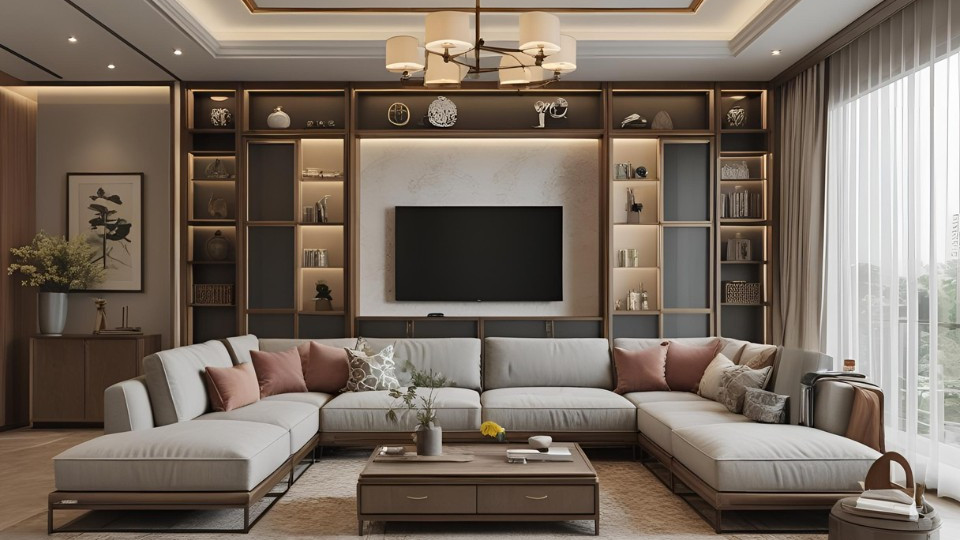
For most urban apartments, modern interior design has a practical advantage. Our Small Apartment Interior Design India guide showcases practical ways to maximize space and functionality.
Why?
Because Indian apartments often have:
· Limited floor space
· Compact bedrooms
· Small kitchens
· Combined living-dining rooms
· Limited storage
· Multiple functions within one room
Modern planning can solve these problems efficiently.
For a Mumbai 2BHK
A practical approach could be:
· L-shaped modular kitchen
· Full-height wardrobes
· Contemporary sofa
· Floating TV unit
· Compact dining table
· Warm wood finishes
· One traditional artwork
· Brass lighting accents
The result is contemporary without feeling generic.
For a Compact 1BHK
Keep things even simpler:
· Multifunctional furniture
· Light colors
· Concealed storage
· Minimal decoration
· Vertical storage
· Mirrors used strategically
· Warm lighting
Traditional accents can then be introduced through textiles and artwork rather than large furniture.
Which Is Better for Large Indian Homes and Villas?

Traditional interiors become easier to use when you have more space.
A large living room can accommodate:
· Wooden swings
· Statement sofas
· Carved furniture
· Large rugs
· Display cabinets
· Artwork
· Decorative lighting
A villa can also incorporate architectural elements such as:
· Courtyards
· Arches
· Columns
· Jaali screens
· Indoor gardens
· Pooja rooms
Modern design also works beautifully in large homes.
In fact, the most sophisticated result may come from combining both.
Example
Imagine a contemporary villa with:
· Clean architectural lines
· Large windows
· Natural stone
· Modern kitchen
· Teak furniture
· Brass accents
· Indian artwork
· Traditional courtyard-inspired landscaping
That’s modern Indian living without losing cultural identity.
Modern vs Traditional Interior Design Cost
Cost doesn’t depend on style alone. Explore our Modern vs Traditional Home Decor guide to understand how different design choices can affect your budget.
The final interior budget depends on:
· Home size
· Materials
· Furniture
· Custom carpentry
· Civil work
· Electrical work
· Lighting
· Kitchen
· Wardrobes
· Flooring
· False ceiling
· Hardware
· Decor
· Project management
Modern Interiors
A basic modern interior can sometimes be more budget-friendly because it uses:
· Simple furniture
· Minimal decoration
· Standard modular systems
· Fewer decorative details
However, premium modern interiors can become expensive when they use customized cabinetry, imported surfaces, smart-home technology and designer furniture.
Traditional Interiors
Traditional interiors can cost more when they involve:
· Hand-carved wood
· Custom furniture
· Brass work
· Handmade textiles
· Bespoke artwork
· Detailed wall treatments
But traditional design doesn’t have to be expensive.
A few authentic pieces can create the look without turning the entire home into a heavily decorated space. Explore our Indian Interior Design Styles guide for more inspiration.
The Better Budget Strategy
Spend more on elements you will use every day:
· Sofa
· Mattress
· Kitchen hardware
· Wardrobes
· Lighting
· Flooring
· Quality storage
Use decorative elements strategically.
Which Style Works Better for the Indian Lifestyle?

This is where the answer becomes interesting.
Indian homes often have needs that don’t fit neatly into either style.
Families may need:
· A pooja area
· Large kitchen storage
· Space for guests
· Festival decoration storage
· Extra seating
· Dining space
· Work-from-home areas
· Children’s study areas
· Elder-friendly furniture
Modern planning handles these functional requirements well.
Traditional design handles the emotional and cultural side beautifully.
That’s why hybrid design often makes the most sense.
The Best Choice: Modern Traditional Fusion
If you can’t decide between modern and traditional, don’t.
Combine them.
A modern-traditional fusion interior uses contemporary planning as the foundation and traditional Indian elements as accents. Our Modern Home Interiors India guide showcases ways to blend contemporary design with Indian character.
The Formula
Think:
Modern layout + traditional materials + contemporary lighting + Indian craftsmanship
For example:
· Modern modular kitchen
· Traditional brass accessories
· Contemporary sofa
· Teak coffee table
· Neutral walls
· Handwoven rug
· Indian artwork
· Minimal pooja unit
· Warm layered lighting
This approach is particularly relevant in 2026, when Indian interiors are increasingly moving toward warmth, personalization, craft and natural materials rather than purely catalogue-driven minimalism.
How to Create a Contemporary Indian Home
1. Start With a Modern Layout
Keep circulation clear and plan storage properly.
2. Choose a Warm Base
Use cream, beige, sand, taupe or warm grey.
3. Add Natural Wood
Teak, walnut or another suitable wood tone can add warmth.
4. Introduce One Traditional Statement
Try:
· Wooden swing
· Brass lamp
· Indian artwork
· Handwoven rug
· Carved cabinet
5. Layer the Lighting
Combine functional lighting with decorative fixtures.
6. Keep Decoration Intentional
Don’t fill every shelf.
Give special pieces enough space to stand out.
7. Add Greenery
Plants can soften both modern and traditional interiors.
Room-by-Room Comparison

Living Room
Modern
· Sleek sofa
· Floating TV unit
· Minimal coffee table
· Neutral palette
· Contemporary lighting
Traditional
· Wooden furniture
· Brass accents
· Rich textiles
· Indian artwork
· Decorative lamps
Best Choice
Modern foundation + traditional accents.
Bedroom
Modern
· Platform bed
· Built-in wardrobe
· Neutral colors
· Minimal decor
Traditional
· Wooden bed
· Carved details
· Rich fabrics
· Brass accessories
Best Choice
For most homeowners, a modern bedroom with natural wood and traditional textiles offers an excellent balance. Our Modern Bedroom Designs guide showcases ways to combine contemporary comfort with traditional character.
Kitchen
Modern usually wins here.
Why?
Kitchen functionality depends heavily on:
· Storage
· Ergonomics
· Appliance integration
· Easy cleaning
· Counter space
· Lighting
A modular kitchen can incorporate traditional visual elements through colors, handles, wood textures, tiles or accessories. Explore our Modular Kitchen Design guide for stylish and practical ideas.
Pooja Room
Traditional elements often work naturally here.
Consider:
· Natural wood
· Brass
· Jaali
· Stone
· Traditional motifs
· Warm lighting
However, a minimalist pooja unit can also work beautifully in a modern apartment.
Modern vs Traditional: Which Is Better for Different Homeowners?
Homeowner | Recommended Style |
Young professional | Modern |
Compact apartment owner | Modern |
Joint family | Modern-traditional fusion |
Heritage-home owner | Traditional / Fusion |
Luxury villa owner | Fusion |
Minimalist homeowner | Modern |
Craft enthusiast | Traditional / Fusion |
Frequent entertainer | Modern / Fusion |
Family with inherited furniture | Fusion |
First-time homeowner | Modern / Fusion |
5 Reasons to Choose Modern Interior Design
1. Better Space Efficiency
Excellent for compact apartments.
2. Easier Maintenance
Simpler surfaces generally mean less cleaning.
3. Flexible Storage
Built-in systems can maximize available space.
4. Easy Technology Integration
Smart switches, lighting and appliances fit naturally.
5. Timeless Foundation
A simple base can be updated with accessories later.
5 Reasons to Choose Traditional Interior Design
1. Strong Cultural Identity
The home can reflect Indian heritage.
2. Warmth
Wood, textiles and brass create a welcoming atmosphere.
3. Craftsmanship
Handmade objects add individuality.
4. Emotional Connection
Inherited furniture and family objects can become part of the design.
5. Rich Visual Character
Traditional interiors can feel layered and expressive.
Common Mistakes to Avoid
1. Going Too Modern
A completely sterile interior can feel impersonal.
2. Going Too Traditional
Too much heavy furniture and decoration can make rooms feel crowded.
3. Mixing Too Many Styles
Fusion works when there’s a clear visual connection.
4. Ignoring Scale
A large traditional cabinet can overwhelm a small apartment.
5. Copying Social Media Trends
Your home should support your lifestyle, not imitate someone else’s room.
Indian interior-design commentary in 2026 has also warned against copying Instagram or Pinterest interiors without considering functionality and personal identity.
6. Prioritizing Appearance Over Comfort
A beautiful sofa that nobody wants to sit on isn’t good design.
7. Forgetting Maintenance
Ask yourself how much time you realistically want to spend cleaning and caring for the interior.
How to Decide Between Modern and Traditional Interior Design
Ask yourself these seven questions:
1. How large is my home?
Small spaces often benefit from modern planning.
2. How much storage do I need?
If storage is a major concern, prioritize modern built-in solutions.
3. Do I own traditional furniture?
If yes, incorporate it rather than automatically replacing it.
4. How much maintenance can I handle?
Detailed interiors usually need more upkeep.
5. Do I entertain often?
Your furniture and layout should reflect how guests use the home.
6. Do I want a calm or expressive atmosphere?
Modern design often feels calmer; traditional design can feel richer and more expressive.
7. What do I want my home to say about me?
This may be the most important question.
A home is personal.
Frequently Asked Questions
1. Is modern or traditional interior design better for Indian homes?
Neither is universally better. Modern interiors are usually more practical for compact urban homes, while traditional interiors offer warmth and cultural character. For many Indian families, a modern-traditional fusion provides the best balance.
2. Is traditional interior design outdated in 2026?
No. Traditional Indian elements remain relevant, particularly when used selectively with contemporary furniture, lighting and layouts. Current Indian design trends show renewed interest in regional crafts, traditional elements and personalized interiors.
3. Can I mix modern and traditional interior design?
Absolutely. In fact, combining the two can create a more personal and timeless interior. Use modern planning and storage as the foundation, then add traditional furniture, textiles, artwork, brass or wood accents.
4. Which style is better for a small Indian apartment?
Modern interior design is generally more practical for small apartments because it emphasizes space efficiency, multifunctional furniture, built-in storage and clean layouts.
5. Which style is more expensive?
Neither style is automatically more expensive. Traditional interiors can become costly because of handcrafted furniture and materials, while premium modern interiors can become expensive through customized cabinetry, designer furniture and technology.
6. Which interior design style requires less maintenance?
A simple modern interior generally requires less maintenance because it often has fewer decorative elements and simpler surfaces. However, material quality and furniture selection matter.
7. Can traditional furniture work in a modern home?
Yes. One or two traditional statement pieces can add considerable warmth and personality to a contemporary room.
8. What is modern Indian interior design?
Modern Indian interior design combines contemporary planning, functionality and clean forms with Indian materials, craftsmanship, artwork, textiles, colors and cultural elements.
9. Which style is better for a joint family?
A fusion approach often works well. Modern storage and flexible furniture can support everyday family life, while traditional elements can create a sense of heritage and shared identity.
10. Will modern interior design go out of fashion?
Specific trends can become dated, but a well-planned modern interior built around good proportions, functionality, quality materials and timeless colors can remain relevant for many years.
Conclusion: Modern, Traditional or a Blend?
So, modern vs traditional interior design—which is better for Indian homes?
The honest answer is: it depends on your home and your life.
Modern interiors are excellent when you want clean lines, efficient storage, easy maintenance and flexible spaces. They’re particularly well suited to compact urban apartments and busy contemporary lifestyles.
Traditional interiors are ideal when you value craftsmanship, cultural identity, rich materials, family heirlooms and a warm, layered atmosphere. Our Luxury Indian Home Interiors guide showcases refined ways to combine luxury with Indian heritage.
But there’s no rule saying you have to pick only one.
For many Indian homeowners in 2026, the most successful approach is a modern-traditional fusion.
Use modern design for the things that need to work hard:
· Kitchen
· Storage
· Lighting
· Electrical planning
· Furniture layout
· Multifunctional spaces
Then use traditional Indian design for the things that give the home soul:
· Artwork
· Brass
· Woodcraft
· Textiles
· Handicrafts
· Swings
· Family heirlooms
· Regional accents
The result is a home that’s practical without feeling sterile and traditional without feeling dated.
And that’s really the sweet spot.
The best Indian home isn’t the most modern or the most traditional. It’s the one that combines functionality, comfort, culture, and personality in a way that genuinely feels yours.


Comments